Further Lostways
There’s an expectation that any endurance event staged by Camille McMillan will be difficult, and that to even finish will be a victory of sorts. This new-for-2026 Further Lostways event in Devon and Cornwall — part of McMillan’s Further series — was no different in this respect. Created in collaboration with Alex McCormack, a strong ultra cyclist who’s leading the professionalisation of the discipline, the 750-kilometer route is an adventure, for mere mortals, on the only-just-doable edge of possible. Alex took time out from setting fastest known times in other events to trace a stunning route around his neck of the world.
We gathered at the Oxenham Arms, a time-out-of-mind inn in the tiny village of South Zeal on the northern edge of Dartmoor. The inn, a former monastery, was built around a tall, Neolithic standing stone, one thousand years older than Stonehenge, and it’s still there, seemingly propping up a ceiling but, in fact, it pokes through the floor upstairs.
This auspicious start location for the event remained undisclosed until the last moment. The start was to be the next day at 6am at the top of the closest hill. Before we even began it was characteristically blunt: a climb straight on to the moor, a boggy trudge to the summit of Cosdon Beacon, rising 550 meters above sea level. Immediately exposed to the raw landscape that would define the days ahead.
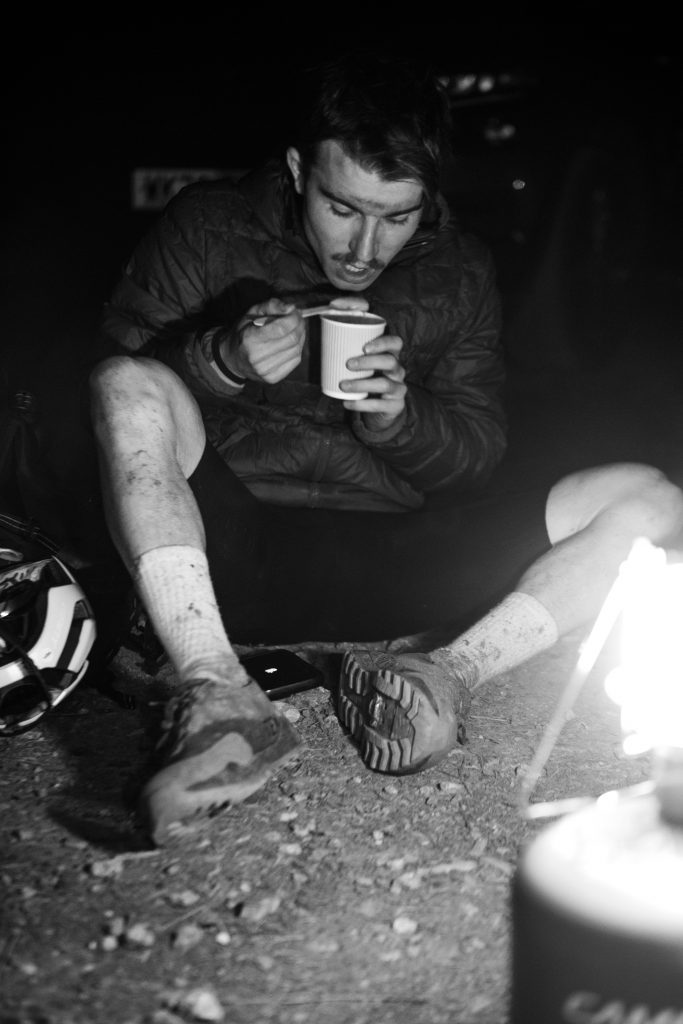
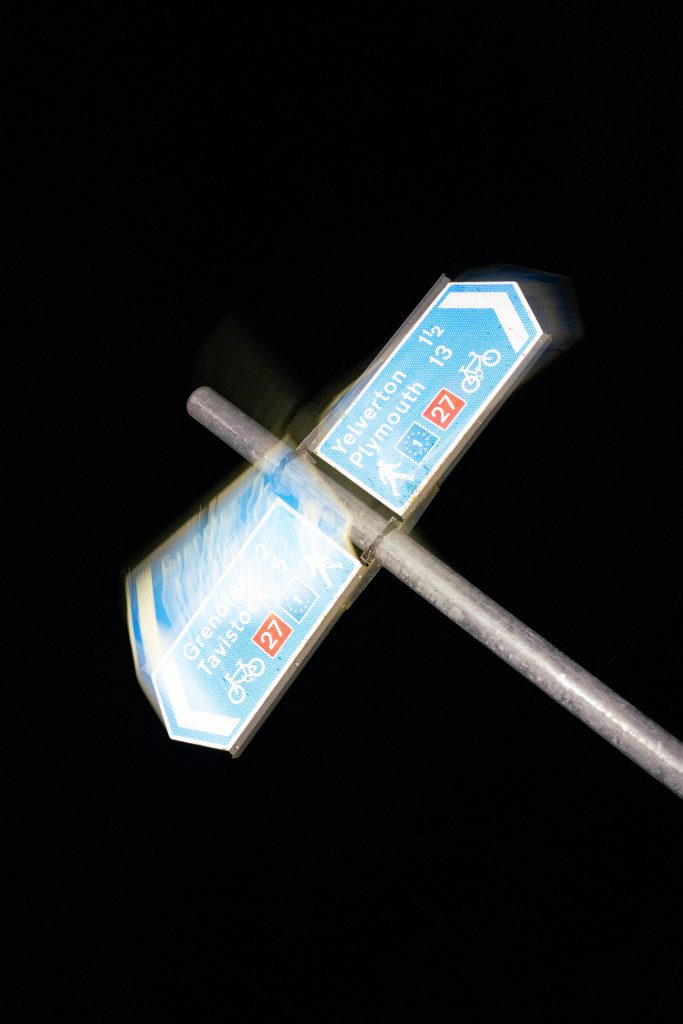
That night, scattered around the summit — where, unusually for England, wild camping is legally permitted — riders bivvied under a clear, cold sky pricked with stars. From there, starting the next morning, the rhythm was set: shared-use paths demanding patience and courtesy, quiet coastal roads with beautiful coastal views, and the straight flat smoothness of the Camel Trail, route of the former Bodmin and Wadebridge Railway. Freight carriage on the line ceased in 1983 and soon after a former exhaust shop owner switched to hiring bikes at the Wadebridge trailhead the Camel Trail became one of Cornwall’s top tourist attractions. We rode it on a Friday, before the weekend crowds arrived.
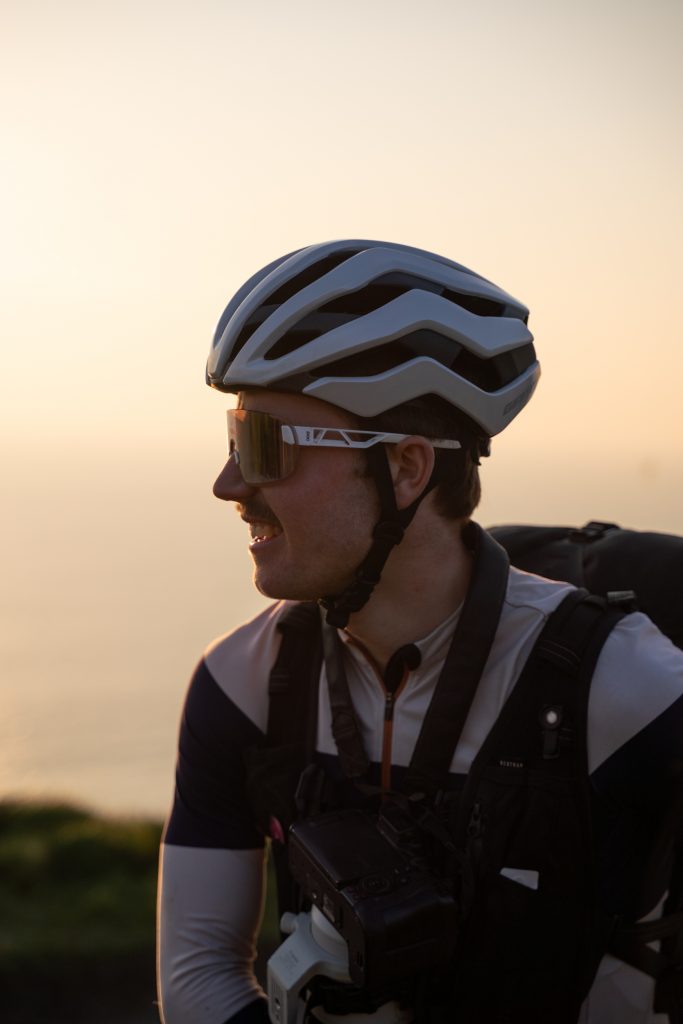
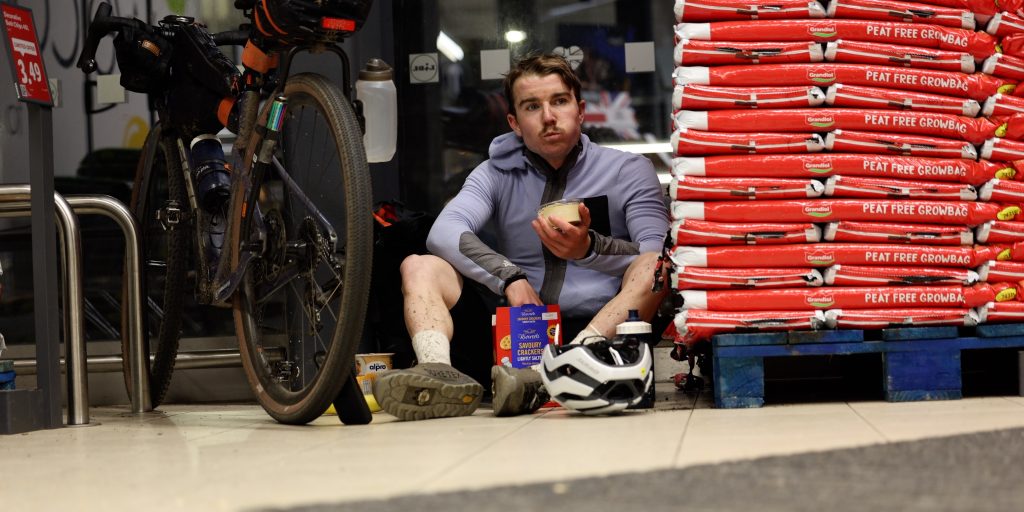
Long golden-hour stretches along the coast near St Ives and Penzance gave way to relentless, punchy climbs that stressed tired legs. Food, as in all such endurance events, became both obsession and reward — my highlight was gobbling down a when-in-Rome Cornish pasty, but the constant need for calories meant I derived almost as much joy from a snack of crackers and hummus eaten in the lobby of a drafty Lidl supermarket.
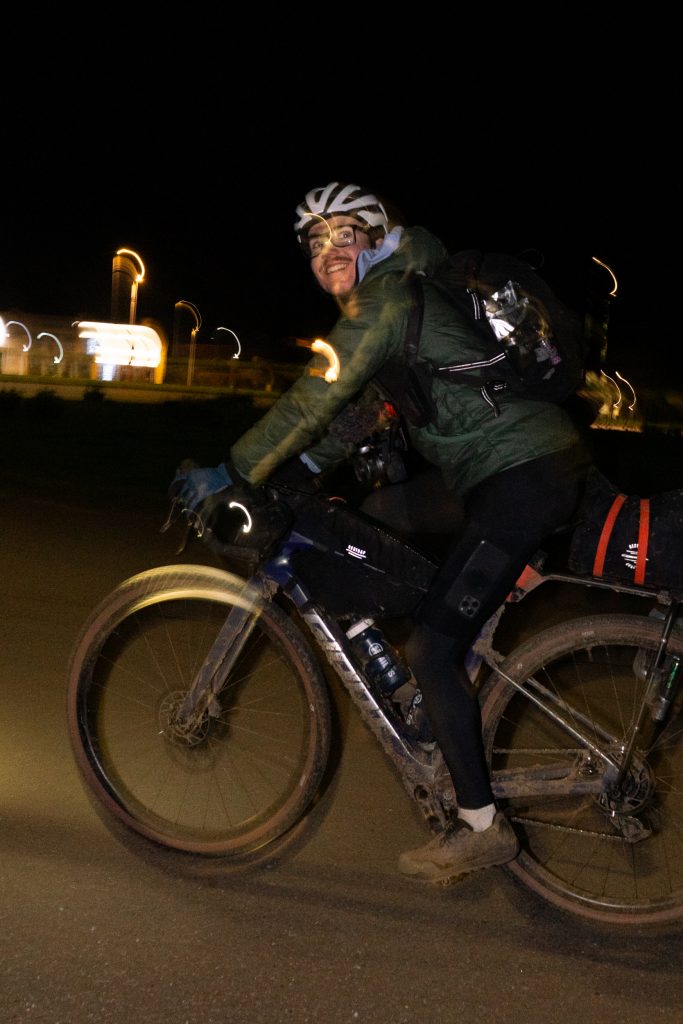
Sleep was opportunistic; necessary, but swapped for forward progress. By the time we pushed through 600 kilometers, near Dartmouth, fatigue had set in for me, but, then, so had resolve. The final stretch wasn’t triumphant so much as honest: a long drag, sore legs, and the simple draw of a warm meal at the end. Further Lostways wasn’t about racing for me, it was about seeing it through to the end. Naturally, the sheer beauty of the route done in daylight or half light, was compensation for the pain.
My elapsed time was 62 hours 58 minutes, and I filmed the whole thing as I went.